
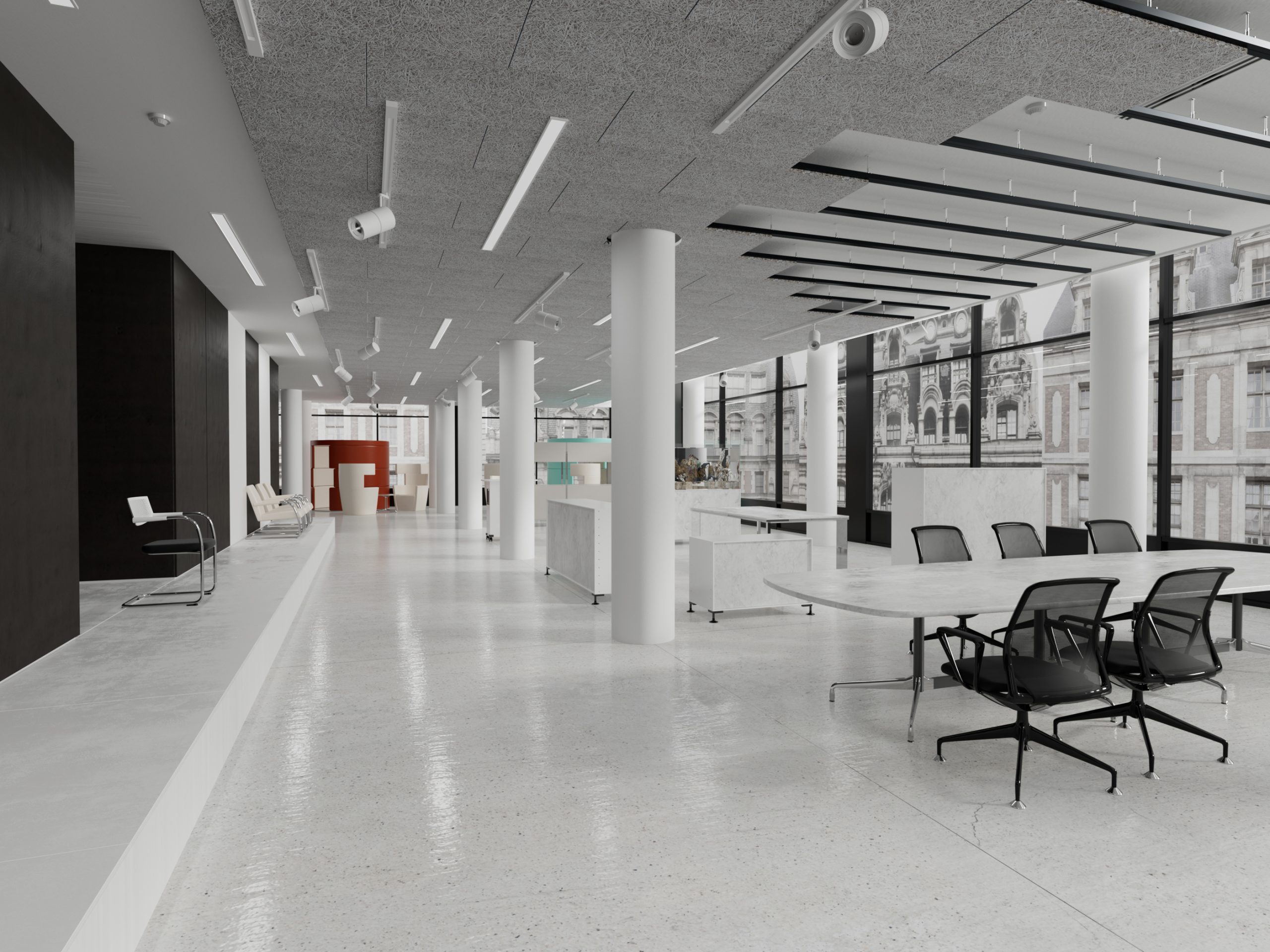
A well-designed ceiling can do more than complete the look of a commercial interior. The right acoustic ceiling can help control echo, reduce unwanted reverberation, and make a space more comfortable for the people who use it every day.
This is especially important in open offices, conference rooms, schools, healthcare facilities, restaurants, and other commercial environments where hard surfaces and large open areas can make noise travel easily.
Acoustic ceiling systems come in a variety of materials, shapes, and finishes, so improving the sound quality of a room does not mean sacrificing its appearance. Here are some acoustic ceiling ideas to consider when planning your next commercial interior project.
1. Add Acoustic Ceiling Panels to Open Offices
Open office layouts can encourage collaboration, but they can also create acoustic challenges. Conversations, phone calls, meetings, and general activity can overlap and create a constant level of background noise.
Acoustic ceiling panels can absorb some of the sound that would otherwise reflect off hard surfaces and travel throughout the room. They can be especially useful in areas where employees need to switch between collaboration and focused work.
Pairing an acoustic ceiling with acoustic wall panels can provide additional sound absorption and create a more balanced acoustic environment.
2. Use Wood Ceiling Panels for a Warmer Look
Acoustic treatment does not have to look strictly functional. Wood ceiling panels can introduce warmth and visual interest while contributing to the overall acoustic performance of a space.
Wood finishes can work particularly well in reception areas, conference rooms, offices, hospitality spaces, and other interiors where appearance is an important part of the design.
3. Consider Acoustic Baffles for High Ceilings
Rooms with high or exposed ceilings can be difficult to treat using traditional ceiling systems. Acoustic ceiling baffles offer another option by suspending sound-absorbing elements below the ceiling.
Baffles can help manage reverberation in large, open environments while adding a distinctive architectural feature. They can be arranged in different patterns and orientations to complement the design of the room.
This approach can work well in gyms, cafeterias, auditoriums, open offices, and other spaces where sound has plenty of room to travel.
Learn more about acoustic ceiling solutions.
4. Create a Statement Ceiling
A ceiling does not have to disappear into the background. Decorative acoustic systems can become part of the visual identity of a commercial space.
Different colors, textures, shapes, and layouts can be used to create a ceiling that draws attention while still serving an acoustic purpose. This can be particularly effective in modern offices, retail environments, hospitality spaces, and public-facing areas.
Instead of treating acoustic improvements as something that needs to be hidden, businesses can use them as part of the interior design.
5. Improve Acoustics in Conference and Meeting Rooms
Clear communication is essential in conference rooms and meeting spaces. Excessive reverberation can make it harder for people to follow conversations, especially during video conferences or meetings with several participants.
An acoustic ceiling can help reduce reflected sound and create a more comfortable environment for presentations and discussions. Combining ceiling treatment with strategically placed wall panels can provide additional control over sound reflections.
6. Choose Durable Acoustic Solutions for High-Traffic Areas
Commercial interiors have to withstand everyday use. In schools, healthcare facilities, restaurants, and other busy environments, acoustic materials may need to handle frequent cleaning, impacts, or higher levels of wear.
When selecting an acoustic ceiling, consider more than its appearance and sound-absorption capabilities. The material, maintenance requirements, durability, and conditions of the room should all factor into the decision.
For areas that need additional protection, commercial wall protection panels can be used alongside acoustic ceiling systems.
7. Combine Ceiling and Wall Treatments
Sometimes the best acoustic strategy involves more than one type of treatment. Walls, ceilings, floors, windows, and furnishings can all affect how sound behaves inside a room.
Combining acoustic ceiling panels with wall treatments can increase the amount of sound-absorbing surface in a space and help address reflections from multiple directions. The right combination depends on the size and layout of the room, its existing finishes, and how the space is used.
A professional assessment can help identify problem areas before products are selected and installed.
Acoustic Ceiling Ideas for Different Commercial Spaces
Different environments have different acoustic requirements. A few examples include:
- Open offices: Acoustic ceiling panels and baffles can help reduce background noise and reverberation.
- Conference rooms: Ceiling and wall treatments can improve speech clarity and meeting comfort.
- Schools: Durable acoustic systems can help create quieter classrooms and common areas.
- Restaurants: Sound-absorbing ceilings can make conversations easier in busy dining areas.
- Gyms and recreational facilities: Suspended acoustic elements can help manage reverberation in large, high-ceiling spaces.
- Healthcare facilities: Acoustic treatments can contribute to a more comfortable environment for patients, visitors, and staff.
How to Choose the Right Acoustic Ceiling
The best acoustic ceiling depends on the space, not simply on the appearance of a particular product. Start by considering the room’s size, ceiling height, existing materials, noise levels, and primary use.
You should also consider maintenance requirements, lighting, HVAC equipment, fire protection systems, and other elements that may affect installation. Working with an experienced commercial interiors professional can help ensure that the acoustic treatment works with the rest of the ceiling design.
Improve the Sound and Look of Your Commercial Space
Acoustic ceilings offer a practical way to address unwanted echo and reverberation while giving commercial interiors more design flexibility. From traditional acoustic ceiling panels to wood finishes and suspended baffles, there are options for a wide range of spaces and design goals.
The key is choosing a system that fits both the acoustic needs and the visual character of the room.
Western Interiors provides acoustic ceilings, specialty ceilings, and wall protection solutions for commercial environments. If you’re planning a new build, renovation, or acoustic improvement project, contact Western Interiors to discuss your project and find the right solution for your space.