
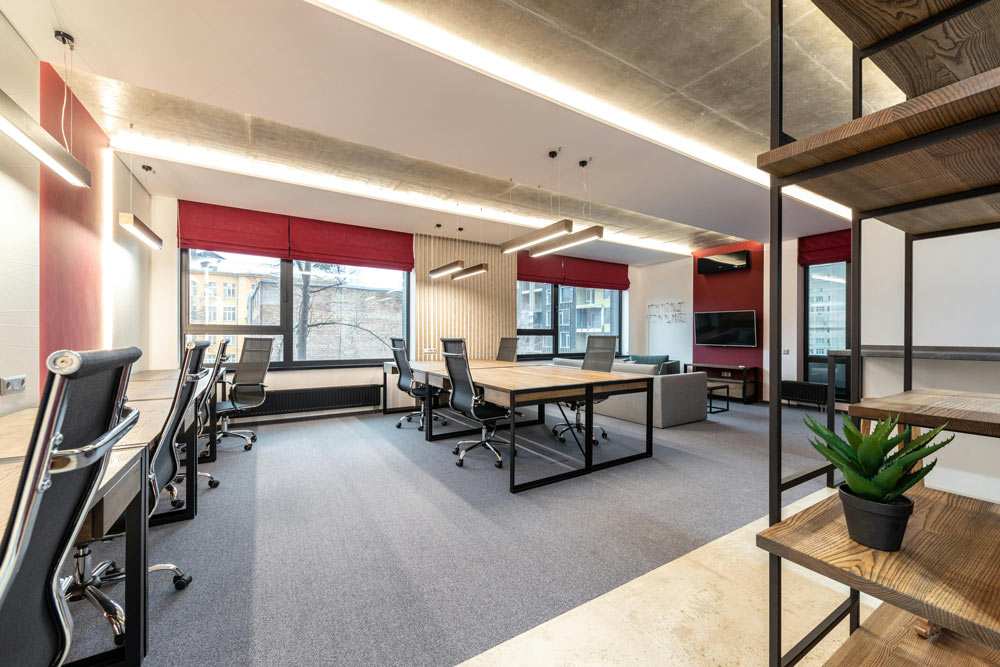
Acoustic ceilings are one of the most common ceiling systems used in commercial buildings today. From offices and schools to healthcare facilities and retail spaces, these ceiling systems help improve sound control, appearance, and overall functionality within a building.
At Western Interiors, we install acoustic ceiling systems designed to support modern commercial environments. Whether you’re planning a new construction project or updating an existing space, understanding how acoustic ceilings work can help you choose the right solution for your building.
What Is an Acoustic Ceiling?
An acoustic ceiling is a suspended ceiling system designed to absorb sound and reduce noise within a room. These ceilings are typically made using specialized panels or tiles that help control echo and improve sound quality throughout a space.
Acoustic ceilings are often installed below the structural ceiling using a metal grid system. This creates a finished ceiling surface while also leaving space above for electrical wiring, plumbing, HVAC systems, and lighting components.
Because of their sound-absorbing properties and practical design, acoustic ceilings are commonly used in commercial environments where noise reduction and accessibility are important.
👉 Acoustic Ceiling Installation
How Acoustic Ceilings Improve Sound Control
One of the main reasons businesses choose acoustic ceilings is to improve interior acoustics. In large or open spaces, sound can bounce off hard surfaces and create echo, making conversations harder to hear and increasing background noise.
Acoustic ceiling panels help absorb sound waves and reduce reverberation, creating a quieter and more comfortable environment. This is especially beneficial in:
- Office buildings
- Conference rooms
- Healthcare facilities
- Schools and classrooms
- Restaurants
- Retail stores
Improved sound control can help employees focus better, support clearer communication, and create a more pleasant experience for customers and visitors.
Common Types of Acoustic Ceiling Systems
There are several types of acoustic ceiling systems available depending on the needs of the space. Some of the most common options include:
Suspended Acoustic Ceilings
Suspended ceilings, also called drop ceilings, use a visible metal grid with removable ceiling panels. These systems are widely used because they provide easy access to utilities above the ceiling.
Specialty Acoustic Ceilings
Specialty acoustic ceilings are designed for unique architectural or performance needs. These may include custom shapes, modern finishes, or enhanced sound absorption capabilities.
Acoustic Ceiling Clouds and Baffles
In open-concept spaces, ceiling clouds and baffles can help reduce noise without requiring a full suspended ceiling system. These designs are commonly used in modern offices and collaborative workspaces.
Additional Benefits of Acoustic Ceilings
Beyond sound control, acoustic ceilings offer several practical advantages for commercial properties.
Cleaner Interior Appearance
Acoustic ceilings help conceal wiring, ductwork, and mechanical systems while creating a more finished and organized appearance.
Easier Maintenance Access
Because many acoustic ceiling panels are removable, building maintenance teams can access electrical and HVAC systems more easily when repairs or upgrades are needed.
Improved Lighting Performance
Certain ceiling panels help reflect light more efficiently, contributing to brighter interiors and improved workplace visibility.
Energy Efficiency Support
Some acoustic ceiling materials provide added insulation that may help support indoor temperature regulation and HVAC performance.
Choosing the Right Acoustic Ceiling for Your Space
Every commercial building has different acoustic and design needs. Factors like ceiling height, room layout, occupancy levels, and intended use all play a role in selecting the right ceiling system.
For example, an office may prioritize speech clarity and noise reduction, while a retail store may focus more on aesthetics and lighting. Working with experienced ceiling contractors helps ensure the system is both functional and visually aligned with the space.
At Western Interiors, our team works with contractors, architects, and property owners to install acoustic ceiling systems tailored to each project’s goals and performance requirements.
Professional Acoustic Ceiling Installation Matters
Proper installation is essential for achieving the full benefits of an acoustic ceiling system. Poor installation can affect sound absorption, panel alignment, durability, and long-term maintenance.
Professional installers understand how to properly integrate ceiling systems with lighting, HVAC components, fire safety systems, and overall building design. This helps ensure a clean finish and long-lasting performance.
Whether you’re upgrading an office, remodeling a healthcare facility, or completing a new commercial build, choosing the right ceiling contractor can make a major difference in the final result.
Learn More About Acoustic Ceiling Solutions
Acoustic ceilings are an effective solution for improving sound control, functionality, and visual appeal in commercial spaces. With multiple system options available, businesses can create quieter and more efficient environments that support both employees and visitors.
If you’re considering acoustic ceiling installation for your next project, Western Interiors provides professional ceiling solutions tailored to commercial spaces of all sizes. Contact our team today to learn more about available acoustic ceiling systems and installation services.